
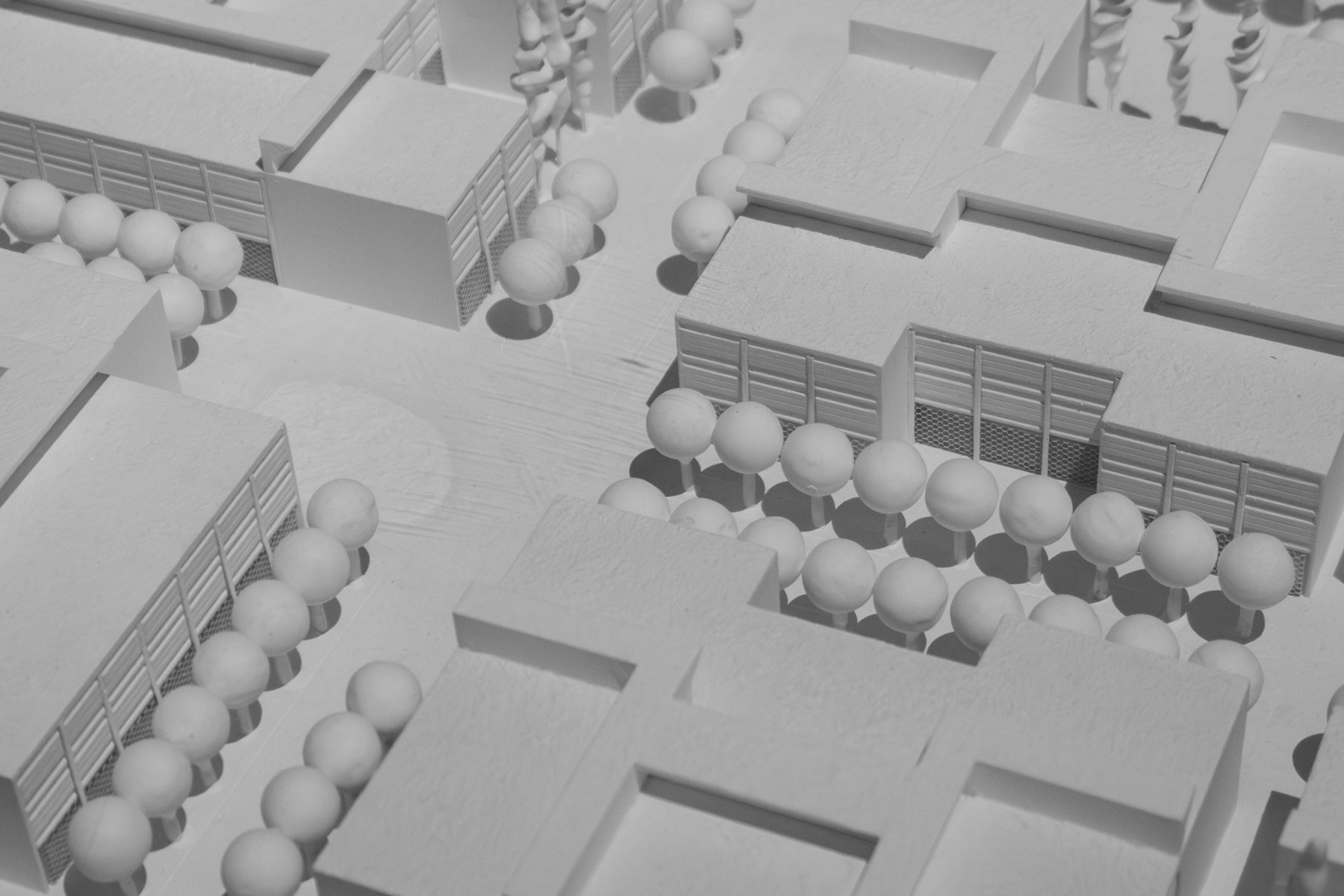
One of the things that attracted me to architecture over other disciplines is the ability to work at multiple scales simultaneously. The same principles that govern a city's organization inform the design of a chair.
I first really understood this when working on the Electric One project. I was designing not just individual stores, but a system that would repeat across 150 locations. But the success of the system depended on getting the smallest details right. A shelf dimension. The width of a retail counter. The brightness of a light fixture.
Get these details wrong at the small scale, and the 150 repetitions amplify the problem. Get them right, and the repetition reinforces the coherence. Scale amplifies both success and failure.
Since then, I've been intentional about understanding how design principles scale. Take proportion. A proportional relationship that works for a building facade also works for a window within that facade. It works for the mullions within that window. It works for the furniture scale. There's a unity of thinking across these scales.
This understanding has shaped how I approach design. Whether we're thinking about master planning for an aerotropolis or specifying the thickness of a handrail, we're answering the same core questions. What's the relationship between elements? How do they connect? What feeling do they create? What function do they serve?
I've noticed that young architects often think about scale hierarchically. The building is important. The detail is less important. But in reality, people experience the detail. Their quality of life is affected by whether a staircase is comfortable to use, whether a door opens smoothly, whether light falls on a surface beautifully. These details are the building.
Conversely, getting the master-plan thinking right means that individual buildings sit well in context. They relate to the grid. They support the larger urban system. They contribute to a sense of place.
For Studio Dotbox, this multi-scale thinking is embedded in how we work. We never design a building without thinking about how it sits within its urban context. We never detail a space without considering how materials and proportions affect daily human experience. We never draw a line without understanding what larger system it belongs to.
That coherence across scales is what makes space genuinely good.